


Injection molding is one of the major methods for plastics molding. This method is widely used for various molded products because it is possible to produce parts of high quality at a low cost and in a short time.
Molding by injecting a material into the mold
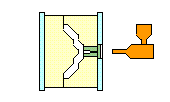

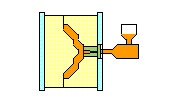
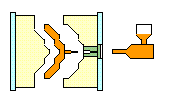
1. Melt the material in the barrel 2. Inject the material into the mold 3. Cool down and remove the part

Procedure:
- A molding plastics is heated and mixed by the screw in the heated barrel, and will be plasticated to become molten plastics. (In this textbook, the material before heating is called a “resin” and the plasticated material is called a “molten plastics.”).
- Inject the molten plastics from the heated barrel into the mold with high pressure.
- Cool to solidify the molten plastics in the mold.
- Push the part out with the ejection pins.
Advantages:
- Enables the molding of most thermoplastics and some thermosetting plastics.
- Enables the molding of high quality parts for low cost in a short time.
- The molding cycle can be automated.
- The structure of a mold can be changed freely depending on the shape or material of the parts.
Disadvantage:
- If the setting for a certain molding material is not done in correctly, a defective molding may result
Typical Products
Plastics products such as household goods, home appliances or automobile interiors
Closing mold, Clamping mold
When closing a mold, first close it with low pressure, and then with high pressure just before completion to close it firmly.
Chi tiết hơn:
– If a mold is closed too quickly, the mold may be deformed; therefore, clamping the mold involves two steps. Two-step mold clamping also helps to prevent foreign matter that is sometimes left behind in the mold from damaging or destroying the mold if the clamping of the mold is done by high pressure.
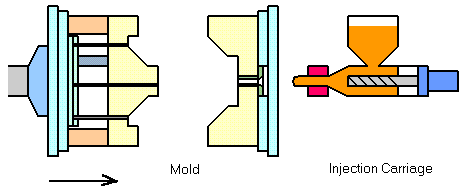
Injection Nozzle Seating, Injection
- When mold clamping is complete, the injection carriage will move forward so that the sprue bush of the mold will touch the nozzle.
- Then, molten plastics will be injected into the mold (the molding material in the injection carriage has already been plasticated, becoming molten plastics).
More details:
The pressure used to inject the molten plastics to the mold is called the primary pressure.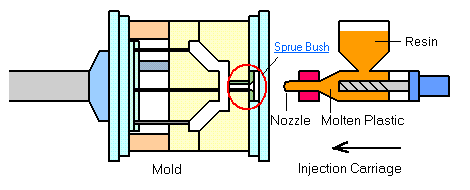
Holding pressure, Cooling, Plastication
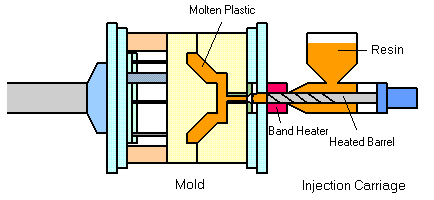
– Even after the molten plastics is injected into the mold, the holding pressure is maintained while the molten plastics cools in the mold. While the molten plastics is being cooled and solidified in the mold, the molten material for the next molding will be plasticated. – – This plastication is done by the heat generated in mixing the resin with a screw, or the band heater that is attached around the heated barrel.
More details:
Holding pressure is also called the secondary pressure. It is used to add more molten plastics by putting pressure on the filled molten plastics in the mold for mold shrinkage that is caused by cooling solidification, so that the sink mark of parts can be reduced.
 Injection nozzle removal, mold opening, part removal
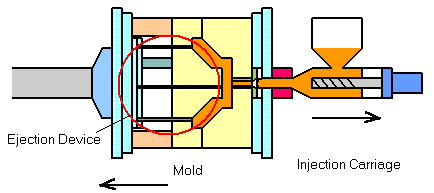
When plastication of the molding material for the next part and cooling of the current part are complete, the injection carriage is separated from the mold and the mold is opened.
When the mold is completely opened, the part will be pushed out by the ejection pins. Then the whole cycle is complete.
More details:
Nozzle removal may often be skipped to reduce the molding cycle.