


A mold is a device made of metal to produce a product faster, less expensive, and more consistently.
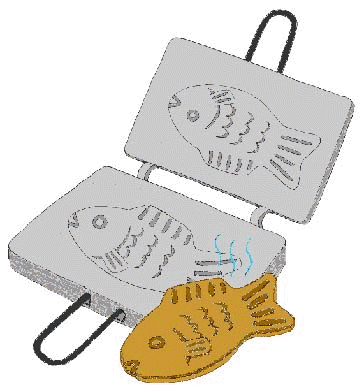
There are various types of molds for molding different products. Here are the major types of molds.
For example, a waffle maker is a kind of mold
Casting Mold
Molds parts by pouring melted metal (liquid metal)
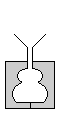

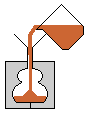

1. Assemble a mold 2. Pour liquid metal 3. Open the mold after cooled down
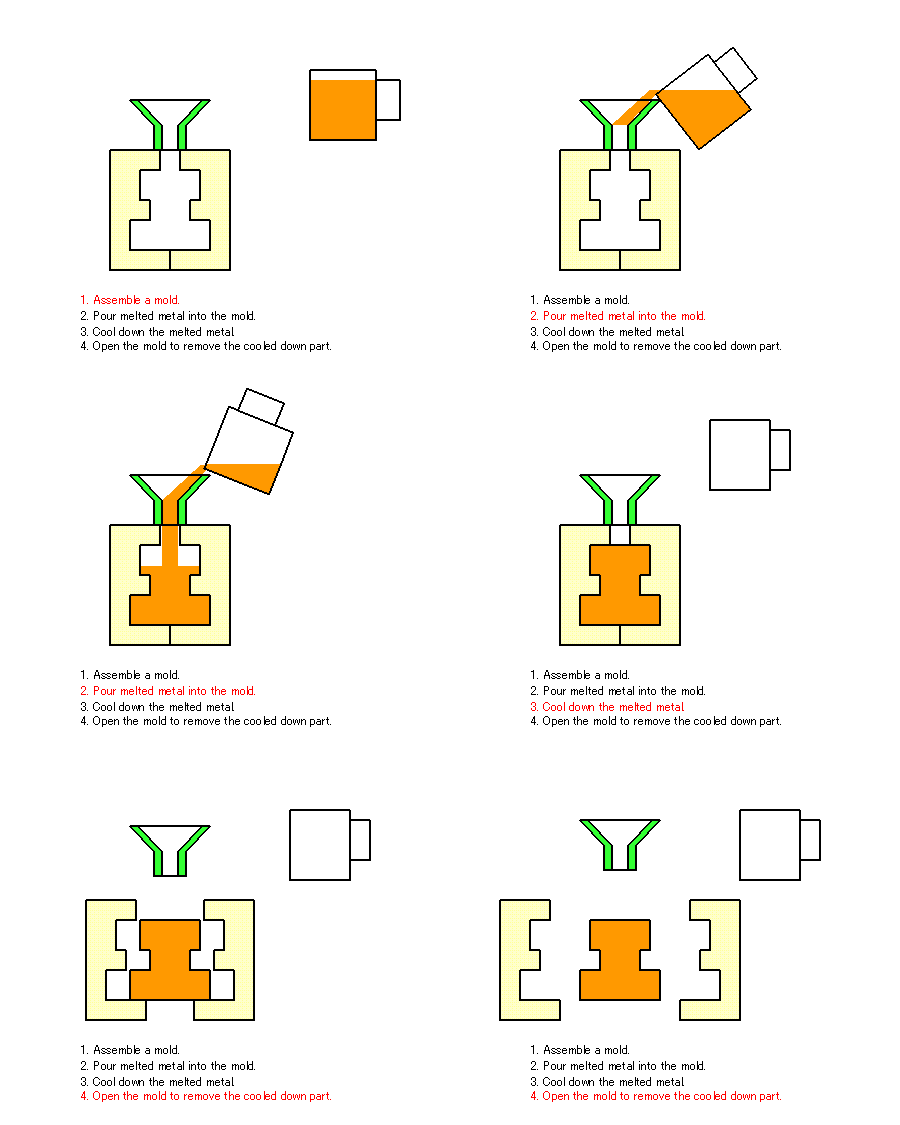
Typical Products: Engine (Cylinder block), Manifold, Wheel, Figurines
Forging
Forms parts by striking a material with a die.




1) Place a material 2) Strike 3) Strike more 4) Complete
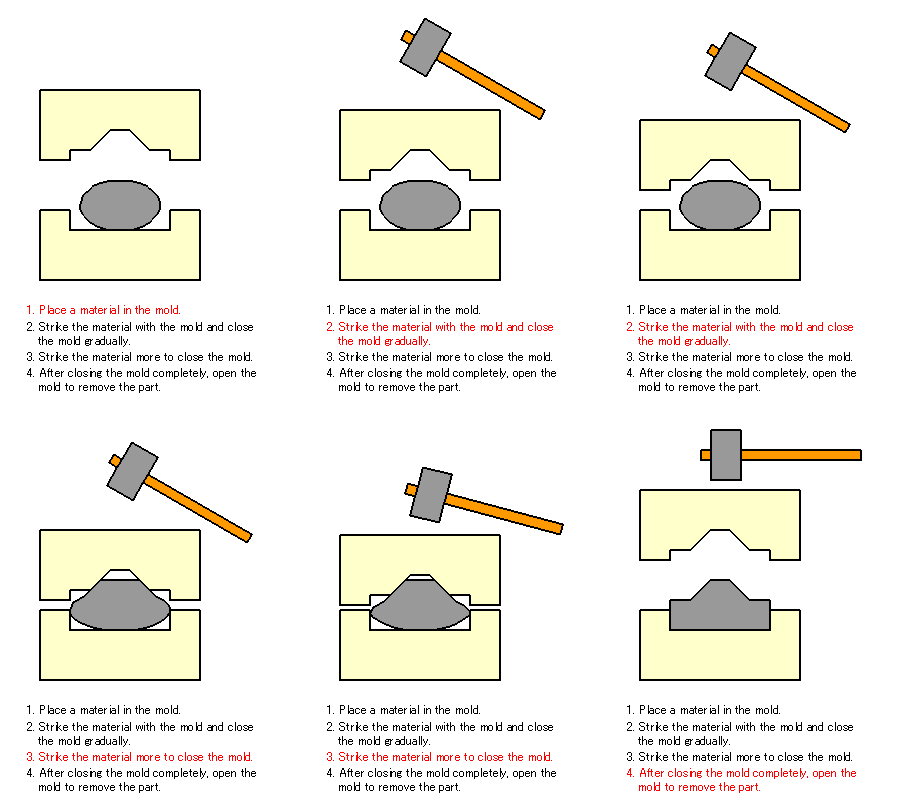
Typical Products: Products that require intensity such as crank shaft, conrod, or knuckle.
More details:
The forging method of softening a material by heat before striking is called hot forging. On the other hand, the method of striking a material without heating it up is called cold forging. Cold forging is used to mold a soft material such as aluminum.
Press Mold
Molds by pressing a sheet against a mold (normally used for metal sheets)


1) Place a material 2) Press a mold 3) Complete
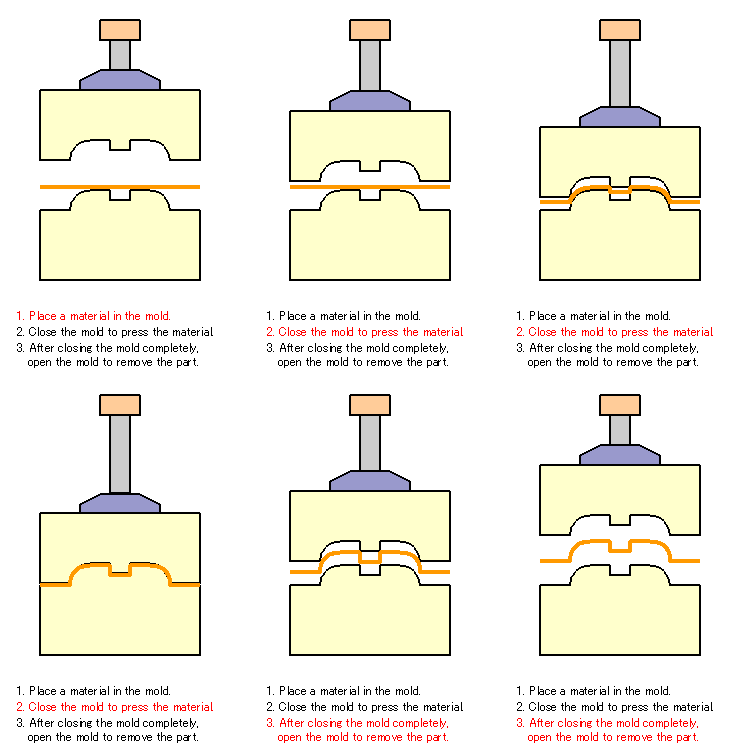
Typical Products: body, gate, steel wheel, or attachable steer of automobile, a pull top of a can, aluminum ash tray, mug cup
More details:
Press type of mold includes bending (molds a shape), trimming (trims off unnecessary parts), edging (processes edge), and drawing (bends the parts that cannot be bent by a bender). Some parts are molded through several procedures, and a progressive press molding is used to perform these procedures sequentially.
Die Cast Mold
Molds by applying pressure to melted metal (liquid metal) and inject it into a mold.
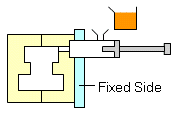
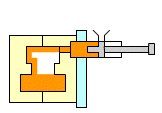
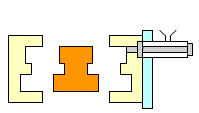
1) Assemble a mold 2) Inject liquid metal with pressure 3) Open mold after cooled down
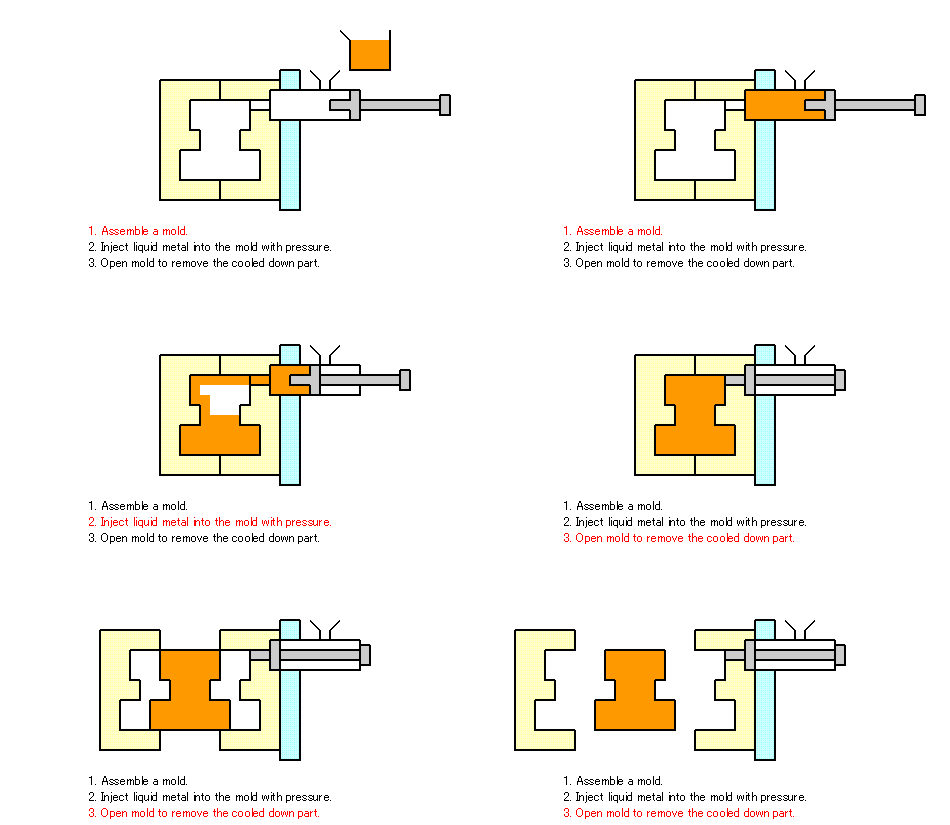
Typical Products:
Aluminum products such as parts of an engine, precision products.
Plastics Mold
A plastics mold is used to mold parts by melting a molding material such as plastics with heat and pressure into the mold.
A plastics mold is used for various molding methods such as injection molding, compression molding, and extrusion. You will learn about injection molding later on. Now, let’s discuss the other methods here.
Typical Products:
Plastics products such as household goods and home appliances, automobile interiors, or general plastics products like a plastics bottle.
Compression Molding
Molds by putting material in a mold first and compressing it.


1) Place a material 2) Press, close mold and compress 3) Open mold
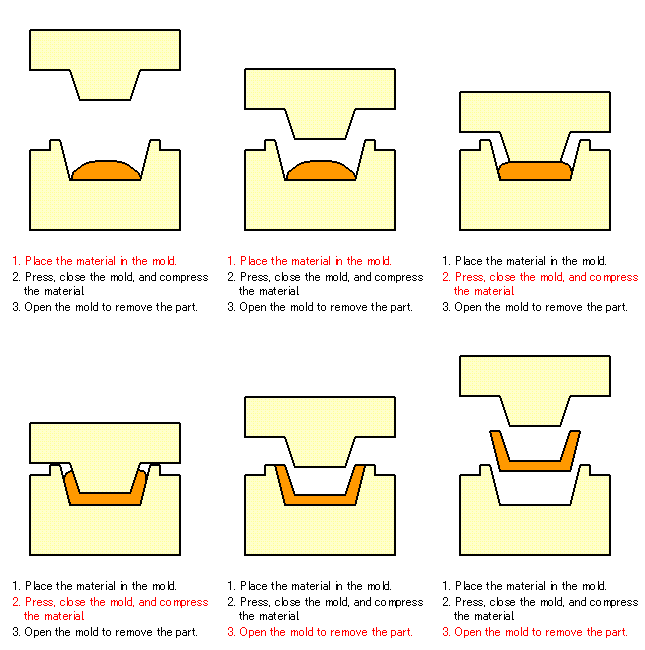
More details:
Let’s look at the detailed procedure now.
Procedure:
- Put a proper amount of molding material of thermosetting plastics powder into the mold
- Close the top mold, and then heat up and pressure the mold.
- The material will be softened and plasticated, filling up the mold.
- Completely harden the material with more heat and pressure.
- Open the mold and remove the part using a take out pin.
Advantages:
As a molding material is put in the mold, it will not move around and distortion of parts can be reduced.
As the pressure for mold clamping is directly applied to the molding material, precise parts can be achieved.
As a gate is not required, there is no limitation on the type of molding material (granule, powder, etc.
Therefore, it is used for molding of thermosetting plastics. As the structure is simple, equipment cost can be reduced.
Disadvantages:
If heating up when the mold is not completely closed or excessively pressured, the molding material may leak out of the mold. If too much molding material is put in, it may overflow. Many will be generated.
Extrusion
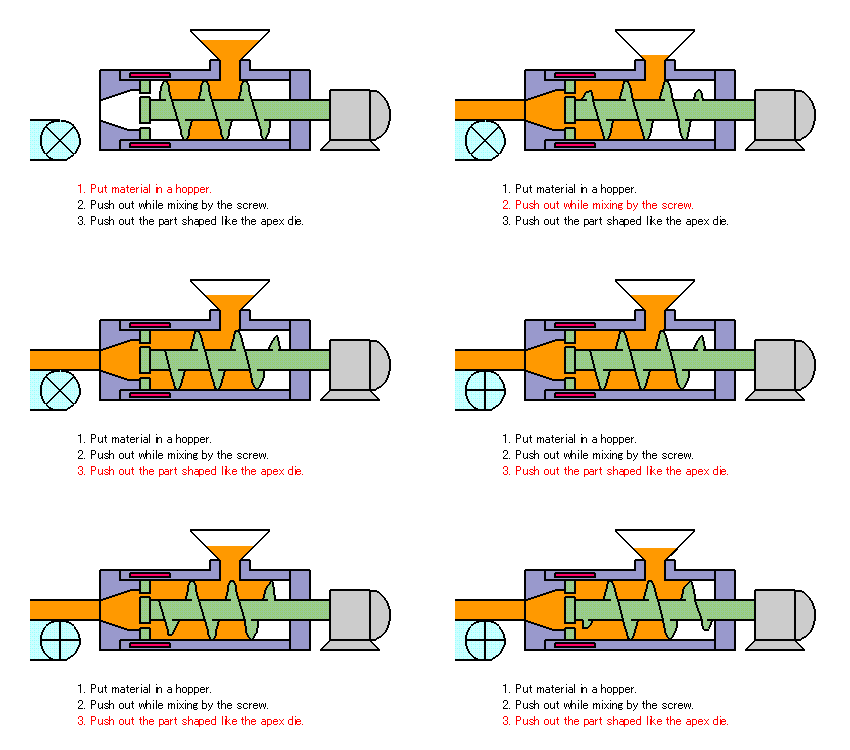
A continuous extrusion is formed by pushing material (that is fed in through a hopper) with a screw, that also mixes the material, out of the device’s exit. The material will have the same cross section as the device’s exit.

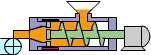
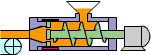
1) Put material in a hopper 2) Push out while stirring with screw 3) Complete
More details:
Let’s look at the detailed procedure now
Procedure
Put a molding material in a hopper (material feed container). Plasticate it by stirring and mixing it with a screw while heating it up. Push the molding material out by the screw through a small hole of the apex mold (a clasp used to give the material a desired shape). Finish molding by cold solidification.
Advantage:
Performs molding continuously and effectively
Disadvantage:
Limited application as this method only molds parts that only have a cylindrical or tube-shaped section.
Blow Molding
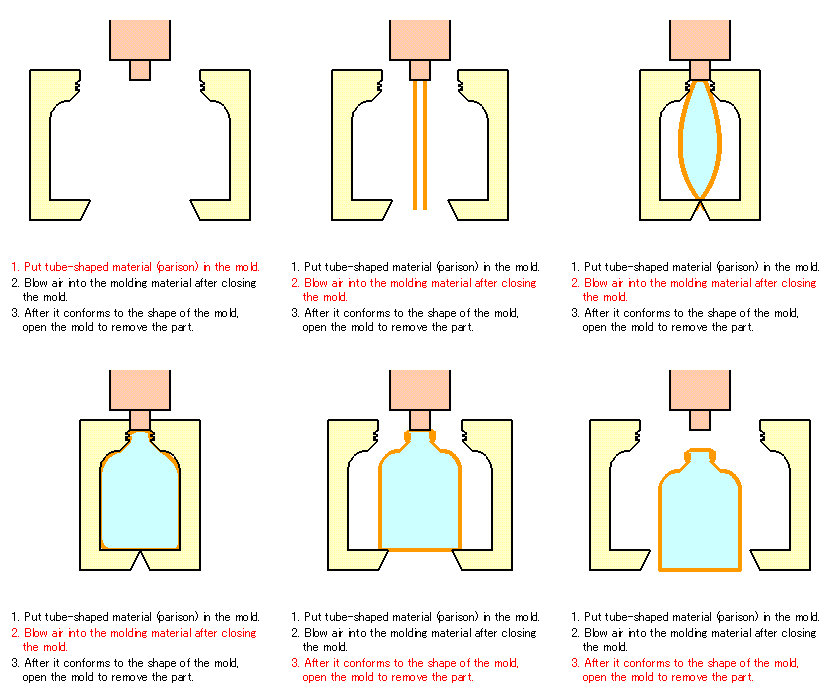
Molds by putting a tube-shape material (parison) in the mold and blowing in air.

 .
. 
1) Put tube-shaped material (parison) in mold 2) Blow in air 3) Complete
More details:
Let’s look at the detailed procedure now
Procedure:
Pinch a part of a molding material that has been molded into a tube shape with a separate mold. Blow compressed air into the molding material, causing it to expand until it conforms to the shape mold to mold the part
Advantage:
Widely used for molding of bottle containers.
Vacuum Molding
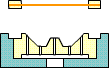
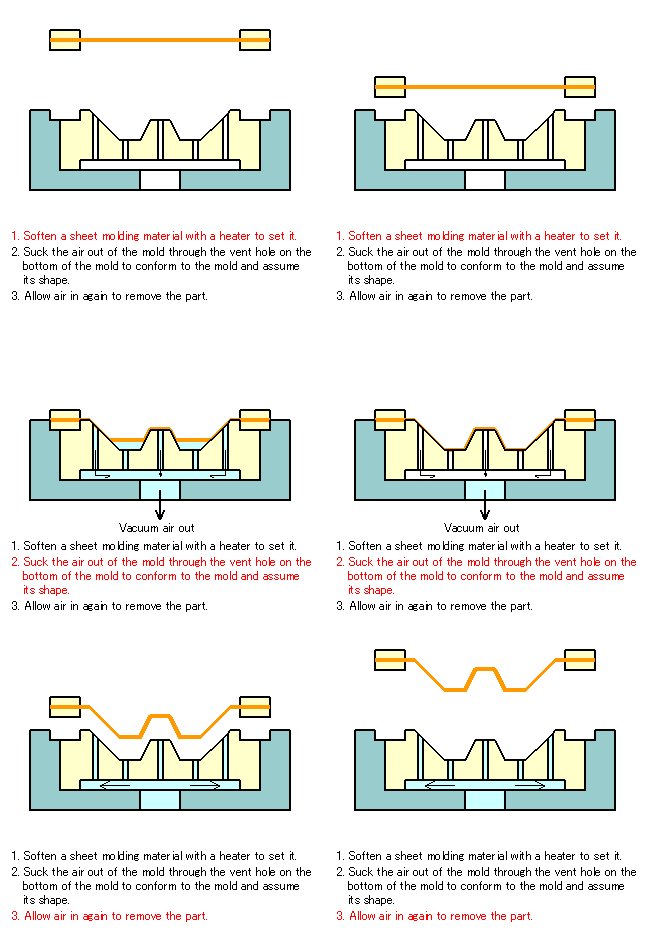
A sheet material is heated and soften conform to the shape of the mold using a vacuum. Either a concave or convex mold can be used.
 .
. 
1) Set material sheet 2) Vacuum air out 3) Allow air in again and remove part
More details:
Let’s look at the detailed procedure below.
Procedure:
- Soften a sheet of thermoplastics molding material with a heater.
- Suck the air out of the mold through the vent hole to form a vacuum, causing the molding material to conform to the mold and assume its shape.
- Allow air in again to remove the part.
Advantages:
As molding pressure can be lowered than the atmosphere pressure (10,333kg/<m2), plaster, wood, or thermosetting plastics can be used as a mold.
Large size parts can be molded with relatively low equipment.
Disadvantage:
This method is generally not used for parts with a complicated shape.